
-
Horizontal lines (Beau’s lines): These can suggest past illness, significant stress, or chronic conditions such as diabetes or circulation issues.
-
Vertical ridges: While common with aging, unusually deep or uneven ridges could point to nutritional deficiencies like iron or vitamin B12 shortage.
-
Dark streaks: Sudden appearance of dark streaks may signal melanoma, a serious skin cancer, and require immediate medical attention.
-
White lines (Muehrcke’s lines): These may be linked to liver or kidney problems, or low protein levels.
What Those Vertical Lines on Your Nails Really Mean
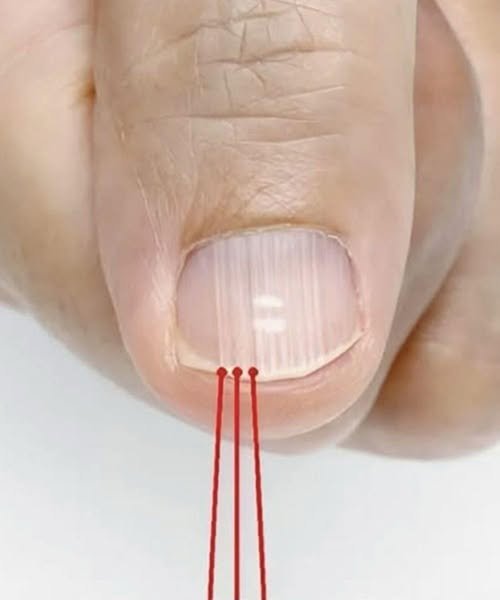
If you look closely at your nails, you might notice faint lines running from the base to the tip. For many people, seeing these lines—especially when highlighted like in the image—can spark concern. Are they a sign of a health problem? A deficiency? Or something more serious?
The truth is much less alarming.
These lines are called longitudinal ridges, and in most cases, they are completely normal. Much like fine lines that appear on the skin over time, these ridges tend to become more noticeable with age. Nails are made of keratin, and as your body’s natural renewal processes slow slightly over time, the texture of the nail surface can change. The result is the subtle vertical striping you see here.
But aging isn’t the only reason they show up. Everyday factors—like frequent hand washing, mild dehydration, or even small, unnoticed trauma to the nail—can make these ridges more visible. If your hands are often exposed to water, soap, or chemicals, the nails can dry out, exaggerating the appearance of these lines.
In some cases, vertical ridges may be linked to mild nutritional imbalances, such as low levels of certain vitamins. However, this is usually not the primary cause, and ridges alone are not a reliable indicator of deficiency.
What’s important is context.
If the lines are:
- Evenly spaced
- Similar across multiple nails
- Not changing rapidly
they are almost always harmless.
On the other hand, changes in your nails can sometimes signal that something else is going on in the body. If the ridges suddenly become very deep, are accompanied by splitting, discoloration, or changes in nail shape, it may be worth looking into further. Conditions like psoriasis or even systemic issues such as iron deficiency anemia can sometimes affect nail texture—but again, this usually comes with additional symptoms, not just simple lines.
The key takeaway is that nails reflect patterns over time, not isolated snapshots. A single feature—like vertical lines—rarely tells the whole story.
If you want to improve the appearance of these ridges, simple care can help. Keeping your nails moisturized, maintaining a balanced diet, and avoiding excessive exposure to harsh chemicals can make a noticeable difference. Gentle buffing can smooth the surface, but it should be done sparingly to avoid thinning the nail.
In the end, the lines shown in the image are most likely just a normal variation—your body’s quiet, everyday signature rather than a warning sign. Understanding that can replace worry with reassurance, and help you focus on what actually matters: consistent, overall health rather than isolated details.